
Enterprise Resource Security Mastering Cryptographic Key Lifecycles

Post-Quantum Cryptography in Industry: Why Long-Lived Systems Need Crypto-Agility

October 26, 2026

Expert article for Industrial Explorer: “Why durable capital goods need crypto agility”

Machines and controllers often run for decades, but their cryptography lasts far less. In Industrial Explorer, Tamer Kemeröz, Member of the Executive Board of MTG AG, explains why industry should adopt post-quantum cryptography now and what manufacturers can do today.

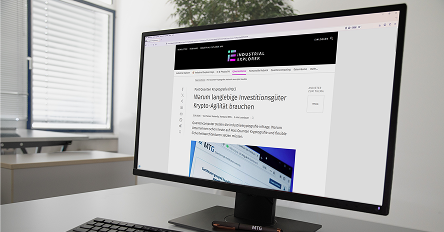
The following text is a summary (abstract) of the key points of the article “Warum langlebige Investitionsgüter Krypto-Agilität brauchen” (Why long-lived capital goods need crypto-agility) by Tamer Kemeröz. The original article was published in German on October 23, 2026, in Industrial Explorer by Vogel Communications Group.

When the Machine Outlives Its Encryption

A machine controller installed in a factory today may still be in operation in 2056. The encryption methods that protect it today could be long obsolete by then. In our article, Tamer Kemeröz describes this lifespan paradox. He explains why manufacturers of control systems, machinery, and OT infrastructure should make the cryptographic foundation of trust in their products quantum-safe today.
TK, PKI-Experte bei MTG

Tamer Kemeröz

Board Member MTG AG

Why Does Post-Quantum Cryptography Already Matter for Industry Today?

Machines and controllers often remain in service for 20 years or more. Their cryptography, such as RSA or ECC for certificates, firmware updates, and machine identities, must therefore hold up even once powerful quantum computers could break it. With “harvest now, decrypt later,” the risk begins today: intercepted data can be decrypted later. For manufacturers, the key question is therefore less when quantum computers will arrive than how long their products need to stay secure.

Why Is PQC Becoming Mandatory for Manufacturers?

With the Cyber Resilience Act (CRA) and the NIS2 Directive, cybersecurity across the entire product lifecycle is becoming a matter of liability. According to Tamer Kemeröz, companies that offer long-lived controllers or IoT devices that cannot be upgraded to quantum-safe cryptography in the field risk sales bans and fines. In MTG AG’s assessment, PQC is thus effectively becoming a compliance requirement. The necessary standards are already in place, and major technology companies are noticeably accelerating their own migration.

What Should Manufacturers Do Now?

Crypto-agility is key: algorithms, keys, and certificates must be replaceable without rebuilding the system. Because secure boot, firmware signing, and device certificates rely on a public key infrastructure (PKI), PQC in industry is above all a question of PKI architecture. Tamer Kemeröz recommends first taking inventory of the cryptography used across the portfolio, reviewing PKI and certificate structures for crypto-agility, and testing hybrid approaches in new developments. Starting early prevents the migration from having to happen later under time pressure.

Read the full article in Industrial Explorer by Vogel Communications Group now (article in German).

Frequently Asked Questions (FAQs)

Why is post-quantum cryptography especially relevant for industry?

Industrial controllers and machines often remain in service for decades. A controller installed today may still be in operation in 2056. Its cryptography must therefore remain secure even once powerful quantum computers could break today’s methods such as RSA or ECC.

What does “harvest now, decrypt later” mean?
In “harvest now, decrypt later” attacks, data is intercepted and stored today in order to decrypt it later with a powerful quantum computer. The risk therefore does not begin when such a quantum computer becomes available, but today.
What does the Cyber Resilience Act have to do with post-quantum cryptography?
The Cyber Resilience Act (CRA) requires manufacturers of connected products to ensure cybersecurity throughout the entire product lifecycle. In MTG AG’s assessment, post-quantum cryptography is thus effectively becoming a compliance requirement in product development for long-lived industrial products.
What is crypto-agility?
Crypto-agility is a system’s ability to replace cryptographic algorithms, keys, and certificates quickly and without disruption. In industry, this is particularly challenging because controllers are sometimes only partially accessible and many devices have to be migrated individually.

Downloads & Links

WordPress Cookie Plugin by Real Cookie Banner