
Our award-winning VMware Encryption-as-a-Service offering is designed to help small and midsize businesses quickly and easily protect all the data on their VMs.
Managed Service von from experienced experts
VMware Encryption-as-a-Service
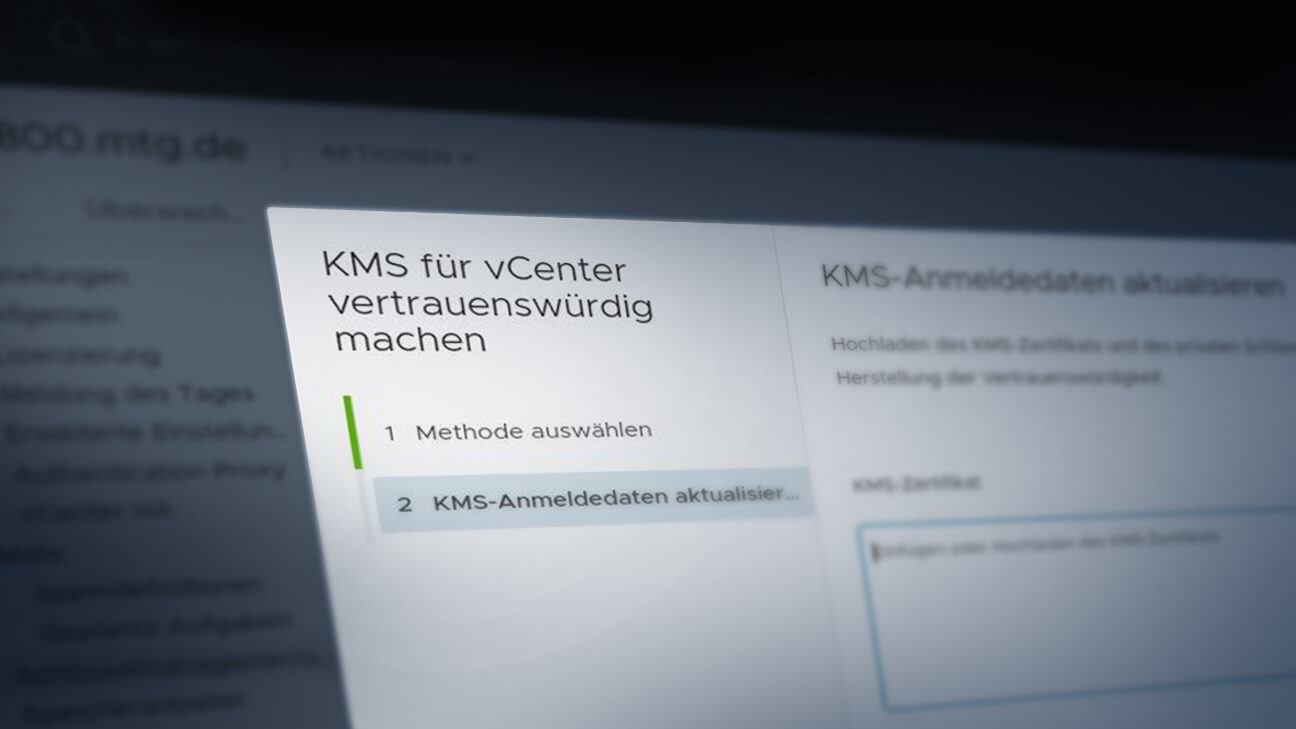

Why VMware Encryption?
Effective Data Protection
More security for your data -
More security for your data -
less concerns
Supports NIS 2, DSGVO, ISO 27001 and industry-specific standards
Easy connectivity & operation
Reach your goal with minimum effort and cost

Back-up, redundancy and high availability

The new DARZ service enables VMware Virtual Machines to be encrypted reliably and completely independent of their location.
Downloads & Links
"Unter Verschluss" Verschlüsselung in VMware-Umgebungen (de)
MTG AG receives Innovation Award from the German IT Security Association (TeleTrust)
Demo-Video on new MTG's "VMware Encryption-as-a-Service" (de)
Hompage of the infrastructure provider DARZ GmbH
MTG is certified by VMware and the compatibility is confirmed
TeleTrust Page - Innovation Award 2023